


26 Oct Great Smoky Mountains Hidden Trails: Local Quiet Hikes
With more than 14 million travelers entering Great Smoky Mountains National Park each year, it reigns supreme as the most visited national park in the United States. Iconic destinations like Cades Cove, Clingmans Dome, and Laurel Falls attract massive congregations of hikers and motorists throughout peak seasons. Yet, beyond the bumper-to-bumper overlooks and bustling visitor center trailheads lies a completely different national park—one characterized by ancient old-growth hemlocks, silent moss-draped microclimates, and undisturbed Appalachian ridgelines.
Venturing along Great Smoky Mountains hidden trails allows you to experience the park in its purest form: untamed, serene, and deeply restorative. Whether you are looking for an intimate half-mile stroll through a high-elevation boreal forest or an all-day trek beside cascading mountain creeks, escaping the crowds is far easier than most visitors realize. Explore this insider guide to find the finest quiet hikes near Gatlinburg and craft an unforgettable, peaceful backcountry itinerary.
Why Seek Out Off the Beaten Path Smoky Mountains Trails?
The vast majority of GSMNP visitors stick to a handful of heavily paved and publicized paths. This leaves hundreds of miles of well-maintained trails virtually untouched, even during peak summer and crisp autumn weekends. Exploring these lesser-known routes yields dramatic benefits for discerning hikers:
- Uninterrupted Wildlife Encounters: Solitary hikers are far more likely to observe white-tailed deer, wild turkeys, salamanders, and black bears moving naturally through their native habitats without the disturbance of large crowds.
- Delicate Microclimates: Tucked away in secluded hollows and high-elevation ridges are unique ecosystems—such as high-altitude cloud forests and limestone sinkholes—that remain preserved precisely because foot traffic is minimal.
- Effortless Parking and Quiet Trailheads: Bypass congested parking lots where visitors circle for hours. The park’s hidden gems often feature quiet pull-offs and tranquil forest approaches.
Top Great Smoky Mountains Hidden Trails & Secret Routes
1. Spruce-Fir Nature Trail: A Sub-Alpine Cloud Forest
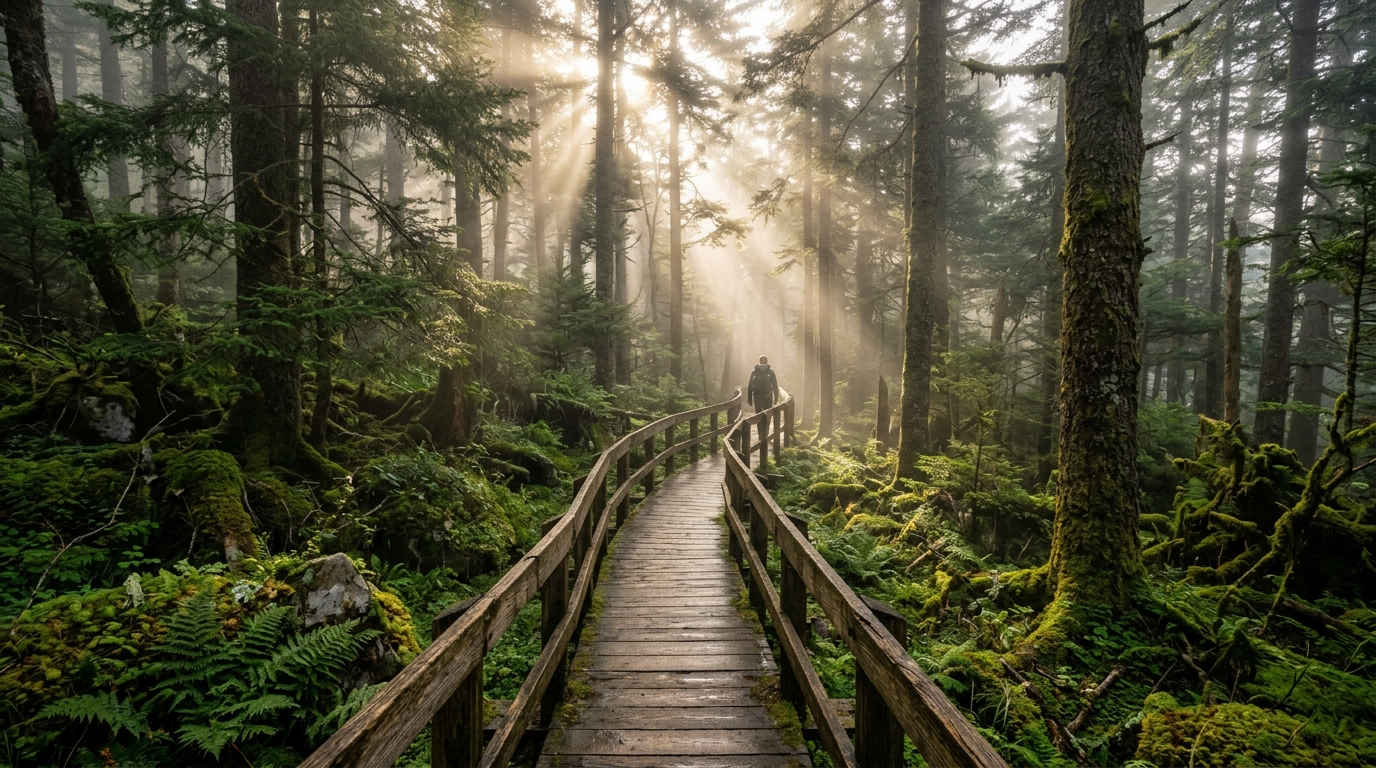
Tucked off Clingmans Dome Road at roughly 6,000 feet of elevation, the Spruce Fir Trail GSMNP is an unassuming half-mile loop that transports visitors into what feels like the Pacific Northwest or southern Canada. Dominated by Fraser firs and red spruce, this high-elevation corridor stays draped in cool mists, low cloud cover, and lush carpets of emerald-green bryophytes.
Because the entrance has only a modest wooden sign and room for a few cars, thousands of motorists zoom right past on their way to the Clingmans Dome observation tower. Those who pull over step directly onto wooden boardwalks suspended over delicate moss beds, breathing in the rich, earthy scent of alpine pine needles.
“If you want to experience the quietest, most otherworldly pocket of the Great Smoky Mountains, skip the crowded overlooks and head to the Spruce-Fir Nature Trail. Because of the extreme elevation and constant moisture, the environment feels distinctly Canadian—thick carpets of fern and moss, towering Fraser firs, and wildlife you simply won’t see in the valleys below. Picking your way across the wet stones and wooden walkways feels like exploring a secret northern rainforest hidden right in the heart of the South.”
— David Waldron, Owner & Local Host at Firefly Gatlinburg
2. Baskins Creek Falls: The Secluded Cascades
While crowds flock by the hundreds to nearby Grotto Falls along the Roaring Fork Motor Nature Trail, the Baskins Creek Trail provides a dramatically quieter route to a stunning two-tiered 40-foot waterfall. Spanning roughly 3 miles roundtrip, this hike features easy undulations through secondary hardwood forests, crossings over babbling mountain brooks, and glimpses of historic homestead ruins.
The final descent down to Baskins Creek Falls is somewhat steep and rocky, which naturally weeds out casual tourist foot traffic. Once at the base, you will discover ample flat boulders to rest upon while soaking in the thunderous falls in near-total privacy.
3. Boogerman Trail: Historic Giants of Cataloochee
Located on the park’s tranquil North Carolina side in Cataloochee Valley, the 7-mile Boogerman Trail loop showcases some of the largest old-growth trees remaining in the eastern United States. Named after local settler Robert “Boogerman” Palmer, the trail winds past mammoth poplars and hemlocks that escaped the logging booms of the early 20th century.
Along the trail, hikers will encounter remnant stone foundations, historic chimneys, split-rail fences, and pristine crossings over Palmer Creek. For travelers eager to experience raw Appalachian frontier history without the tour buses, this remains one of the premier Great Smoky Mountains secrets.
4. Schoolhouse Gap to White Oak Sinks
Situated between Townsend and Cades Cove, Schoolhouse Gap is an easy, wide trail measuring 3.8 miles roundtrip. It follows along a quiet mountain stream and is famous among botanists for boasting one of the greatest concentrations of rare spring wildflowers in the region, including Virginia bluebells, trillium, and pink lady’s slippers.
Branching off this trail is the unmarked trek into White Oak Sinks, an amphitheater-like karst depression featuring dramatic limestone sinkholes, small caves, and seasonal cascading falls. Hikers should note that the national park occasionally closes portions of White Oak Sinks during seasonal intervals to protect endangered bat populations hibernating in the caverns.
Video: Navigating Quiet Corners in the Smokies
Selecting the right trail requires understanding elevation profiles, seasonal weather patterns, and the rhythm of national park traffic. Watch the curated video below for a deeper look into trail options and practical advice on planning your backcountry route:
Trail Comparison: At-a-Glance Guide to Quiet Routes
Review this side-by-side comparison of our favorite off-the-beaten-path paths to match your fitness level and scenic preferences:
| Trail Name | Distance | Difficulty | Primary Highlight | Crowd Density |
|---|---|---|---|---|
| Spruce-Fir Nature Trail | 0.4 miles | Easy | High-elevation boreal cloud forest | Very Low |
| Baskins Creek Falls | 3.0 miles | Moderate | 40-foot waterfall with flat rock lounge | Low to Moderate |
| Boogerman Loop | 7.3 miles | Moderate / Strenuous | Old-growth giants and pioneer ruins | Extremely Low |
| Schoolhouse Gap | 3.8 miles | Easy | Creek walk & spring wildflowers | Moderate |
Essential Tips for Hiking Great Smoky Mountains Hidden Trails
Because secret and primitive trails receive less ranger supervision and routine foot traffic, venturing along these corridors demands mindful preparation:
- Acquire a “Park It Forward” Parking Tag: Valid parking tags are mandatory across Great Smoky Mountains National Park for vehicles stopped for more than 15 minutes. Purchase your daily or weekly permit online or at park visitor centers before setting out.
- Download Offline Maps: Cell service is practically non-existent once you drive deep into hollows or ascend past Chimneys picnic area. Always pre-download topographic trail routes using apps like Gaia GPS or AllTrails, or bring a physical topographic map.
- Practice Bear Etiquette: The Smokies are home to an estimated 1,900 black bears. Carrying bear spray, making modest vocal noise in dense cover, and packing out all food scraps in sealed bags protects both you and the park’s wildlife.
- Watch for Rapid Weather Shifts: Elevation swings dramatically change temperatures. A balmy 75°F afternoon in downtown Gatlinburg can easily feel like a brisk 52°F with wind gusts atop the Spruce-Fir Trail. Layering with moisture-wicking wool or synthetics is essential. Consult our comprehensive Gatlinburg travel guide to plan for seasonal climate conditions.
Frequently Asked Questions
Where can I find quiet hikes in Gatlinburg without the crowds?
To avoid peak crowds, choose trails along Roaring Fork like Baskins Creek Falls, or head toward the high ridges for the Spruce-Fir Nature Trail. Hikes situated along Greenbrier (such as Old Settlers Trail) or the Cataloochee Valley also offer exceptional peace and quiet compared to Cades Cove or Alum Cave.
What is the easiest off-the-beaten-path trail in the Smokies?
The Spruce-Fir Nature Trail is by far the most accessible hidden trail. At just under a half-mile with level boardwalk segments and minimal elevation gain, it is suitable for families, seniors, and casual nature lovers seeking sub-alpine cloud forest scenery without strenuous climbs.
Do I need a backcountry permit to hike hidden trails in GSMNP?
Day hiking on any marked trail in Great Smoky Mountains National Park does not require a hiking permit. However, you will need a valid National Park parking permit (“Park It Forward”) for any vehicle parked at the trailhead. Overnight backcountry camping does require reservations and permits through the National Park Service.
When is the best time of day to hike Great Smoky Mountains hidden trails?
Early morning—between 7:00 AM and 9:00 AM—is the golden hour in the Smokies. You will enjoy crisp mountain air, active wildlife feeding in clearings, and trailheads completely free of parked vehicles. Early evenings before dusk are also serene, provided you carry a reliable headlamp.
Unwind in Mountain Luxury After Your Backcountry Adventure
Nothing complements a day of exploring secret forest paths like soaking in a private, steaming hot tub overlooking panoramic mountain ridges. Skip generic hotel rooms and corporate booking portal fees by reserving an owner-curated chalet nestled right at the doorstep of the national park.